
The Haters Got It Wrong — Don’t Miss Out on the PlayStation Portal
- XmisterfruitsX

- Jan 31
- 3 min read

The PlayStation Portal has spent most of its life being misunderstood.
Dismissed as overpriced.
Mocked as “just a screen with buttons.”
Compared unfairly to consoles, it was never meant to replace.
And because of that, a lot of people missed the point entirely.
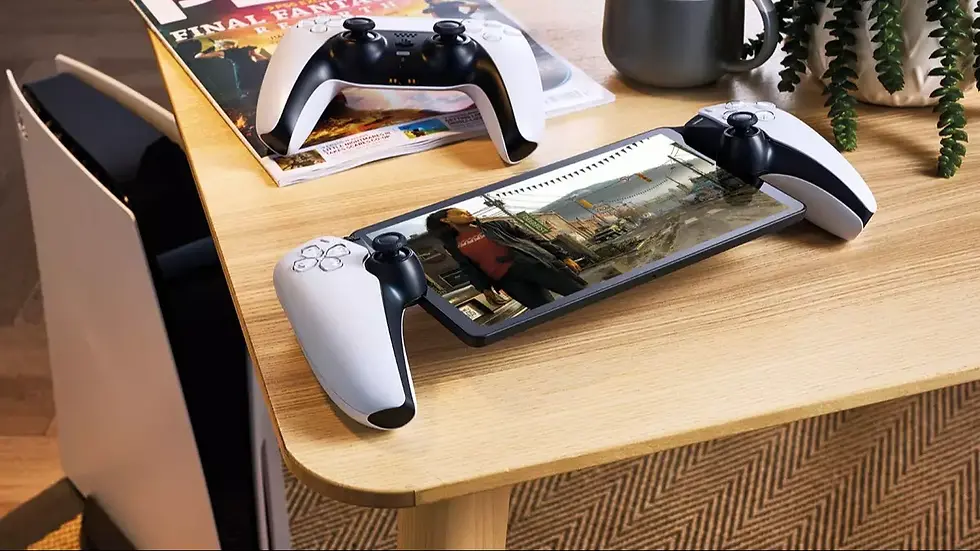
In 2026, the PlayStation Portal isn’t a gimmick—it’s one of the most focused and best-value gaming devices Sony has ever released, especially when you understand what it does and what it intentionally avoids doing.
1. Why the Portal Got Dragged at Launch
The Portal’s backlash was immediate and predictable.
People expected:
• A standalone handheld console
• Native game installs
• Local processing power
What Sony delivered instead was:
• A dedicated Remote Play device
• Built entirely around the PS5 ecosystem
• Designed for low-latency, high-quality streaming
That disconnect fueled most of the negativity.
The Portal was reviewed as if it failed to be something it never claimed to be. It wasn’t meant to compete with portable PCs or hybrid consoles. It was designed to solve a very specific problem: how to play your PS5 anywhere in your home (and beyond) without compromise.
Judging it as a “bad console” misses the fact that it’s not a console at all.

2. What the PlayStation Portal Actually Does Well in 2026
By 2026, the Portal’s strengths are clear—and more relevant than ever.
Dedicated Remote Play Experience
The Portal offers:
• Seamless PS5 integration
• Stable Remote Play performance
• Consistent input response
• and, MOST IMPORTANTLY . . . streaming capabilities
Because it’s purpose-built, it avoids many of the compromises found in general-purpose devices. You’re not juggling apps, background processes, or operating systems. You turn it on, connect, and play.
DualSense Features Included
This part gets overlooked.
The Portal retains:
• Adaptive triggers
• Haptic feedback
• Full DualSense button layout
That means games feel right. No remapping gymnastics. No missing features. No downgraded experience.
It’s the closest thing to holding your PS5 in your hands without actually moving it.

3. The $200 Value Argument (This Is Where the Hate Falls Apart)
Here’s where the conversation usually gets dishonest.
At $200, the PlayStation Portal sits in a completely different category than the devices it’s often compared to.
Let’s be clear about the alternatives:
Nintendo Switch
• Standalone console
• Weaker hardware
• Separate game purchases
• Limited access to PlayStation exclusives
Great device—but it’s a different ecosystem with different costs.
Steam Decks
• Powerful portable PCs
• Much higher price point
• Bulkier form factor
• Requires tinkering and setup
Impressive hardware, but not plug-and-play, and not cheap.
Mini PCs / Handheld PCs
• Flexible but complex
• Varying performance
• Higher learning curve
• Higher cost for comparable comfort
These devices ask more of the user—and the wallet.
The PlayStation Portal doesn’t try to outgun them. It undercuts them by doing one thing extremely well at a fraction of the price.
At $200, you’re not buying power.
You’re buying access—to your existing library, your existing saves, and your existing console experience.
That’s value most critics ignore.

4. Why Focused Hardware Is a Strength, Not a Weakness
A lot of modern tech tries to be everything.
The Portal doesn’t.
It:
• Doesn’t install games
• Doesn’t multitask
• Doesn’t chase specs
Instead, it commits fully to being the best possible PS5 companion device.
That focus results in:
• Better ergonomics than bulky handheld PCs
• Longer comfortable play sessions
• Fewer points of failure
• Less friction between “I want to play” and “I’m playing”
In an era where gaming setups are increasingly complex, the Portal’s simplicity is refreshing.
You don’t configure it.
You don’t troubleshoot it.
You just play.
5. Who the PlayStation Portal Is Actually For
This is the part reviewers should have led with.
The PlayStation Portal is not for:
• Players without a PS5
• Those wanting standalone gaming... unless you are streaming
• People looking to replace a console
But it is for:
• PS5 owners with shared TVs
• Players who want to game around the house
• Parents, partners, and roommates juggling screen time
• Gamers who value comfort and immediacy
• Anyone who wants their PS5 library to feel portable
For that audience, the Portal isn’t optional—it’s transformative.
Final Thoughts: The Portal Didn’t Fail — Expectations Did
The PlayStation Portal was never trying to win a spec war.
It was trying to solve a real problem for a specific audience—and in 2026, it does that better than most alternatives at its price point.
It’s not a Switch competitor.
It’s not a Steam Deck killer.
It’s not a budget PC.
It’s something else entirely:
A clean, focused extension of the PS5 that respects your time, your library, and your comfort.
If you judge it for what it is—not what the internet wanted it to be—the PlayStation Portal is one of Sony’s smartest hardware moves in years.
And the haters?
They got this one wrong.



Comments